
Free Proxy Lists in 2026: How to Use a Public Proxy List for Web Scraping, Geo-Testing, and Privacy — Without Getting Blocked or Compromised

I've been yanking IP:port pairs off public proxy dumps for the better part of a decade now. So here's the honest version of free proxy lists in 2026: they're a rotating pool of strangers' IP addresses. Nothing costs anything, everything promises anonymity, and what you actually get is latency, uptime, and trust that swing wildly from one hour to the next.
They're also genuinely useful. Just not in the way the marketing around them suggests.
There are exactly three things I still use public proxies for. Scraping public pages at low volume. Checking geo-targeted SERPs, ads, and pricing across US regions. And adding a thin, disposable privacy layer when I don't want a site to see my home IP for a single request. That's the whole list.
Public proxies are a commodity, not a security product. The moment you start treating one like a VPN, you've already lost. What follows is how I source them, test them, rotate them, and — more importantly — the specific failure modes that get scrapers blocked and machines compromised.
What a Free Proxy List Actually Is in 2026
A public proxy list is a published set of IP:port pairs — HTTP, HTTPS, SOCKS4, SOCKS5 — that anyone can connect through. Nobody sells them, because nobody owns them.
Who maintains them, then? Volunteer scanning of the IPv4 space. Honeypots that log whoever wanders in. Compromised hosts drafted into service. And commercial providers who republish small samples of their paid pools as marketing bait.
That last category matters, because it explains most of the confusion people carry into this. Three distinct things get called 'free proxies':
Free public lists — anonymous, unaccountable, constantly dying. Freemium trial pools — a few hundred megabytes of legitimate residential IPs before the paywall. And paid residential or datacenter proxies — stable, documented, expensive. Only the first is free in any real sense.
The US context makes it worse. Free US IPs are the most contested entries on every list, because demand for American geo-testing is the highest in the world, and the supply of clean American residential IPs on a free list sits close to zero. Most 'US' proxies you find are datacenter boxes in Ashburn or Dallas. Those get blocked on sight.
HTTP vs. SOCKS5 and Anonymity Levels
Anonymity isn't a binary. Transparent proxies announce you in the X-Forwarded-For and Via headers and pass your real IP right through — useless for anything but a quick relay. Anonymous proxies strip your IP but still admit they're a proxy. Elite (high-anonymity) proxies claim to be an ordinary client, with no proxy headers at all.
Elite is what you want. Elite is what most of a free list is not.
Protocol matters too. HTTP proxies are fine for scripted requests with a plain HTTP client, but they can't carry non-HTTP traffic. SOCKS5 is a raw TCP tunnel, which means it works for a headless browser doing geo-testing, for anything with a TLS handshake you want to preserve, and for tools that don't speak HTTP proxy semantics.
My rule: HTTP/HTTPS proxies for scraping, SOCKS5 for browser-based geo-testing. If a list doesn't label protocols, assume HTTP only.
Where to Get a Free Proxy List Without Wasting Hours
Sourcing is where most people burn their afternoon. Aggregator sites vary enormously in freshness, and a list last validated a week ago is mostly dead weight — you'll spend forty minutes scripting around corpses.
A good source gives you machine-readable output plus health metadata: last-checked timestamps, protocol labels, country and city tags, uptime percentage, and a stable endpoint you can poll instead of scraping HTML tables.
I keep a handful of sources in rotation for that reason. The free proxy list at https://proxybros.com/free-proxy-list/ is a reasonable starting pool — it publishes refreshed US and global entries with health metadata rather than a raw copy-paste dump, which saves you the parsing work.
But a source is only half the job. Pair whatever list you pull with the validation workflow below, because no list, however well maintained, is accurate by the time you read it.
Reading a List Before You Trust It
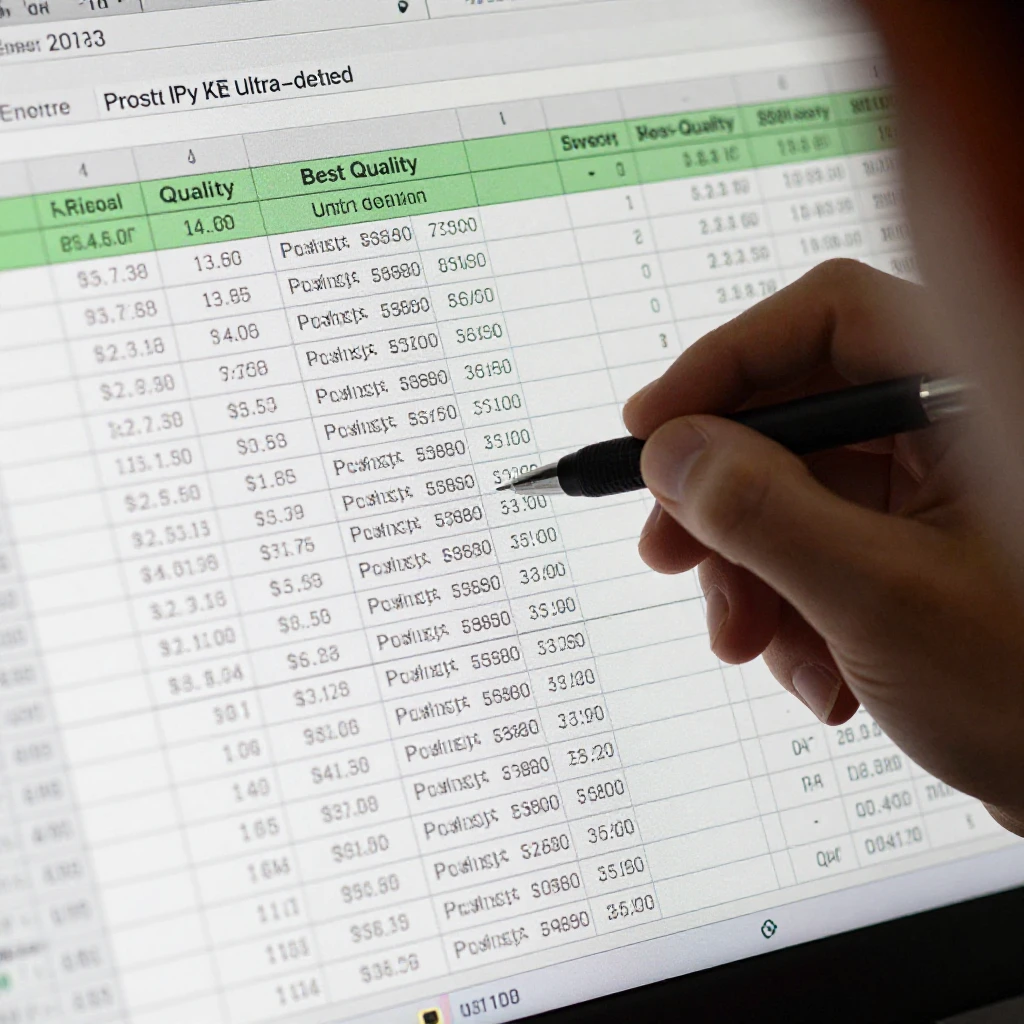
Before I run a single request, I scan the columns. Time first: anything older than an hour is suspect, anything older than a day is archaeology. Anonymity level second — transparent entries go straight in the bin for scraping.
Then the ASN and ISP fields, which are the most underrated signal on the page. If the ISP reads like a hosting company rather than a residential connection, Cloudflare and Akamai have already seen that range a few million times, and your first request comes back as a challenge page or a 403. Datacenter isn't automatically dead, but it's pre-burned. Expect to need residential for anything that matters.
Validating and Rotating Proxies Before You Send Real Traffic
Pre-flight is non-negotiable. I run a concurrency-limited validation pass — twenty to fifty workers, never more, because hammering your own network stack produces false negatives — against an IP echo endpoint. That way I know the exit IP I actually get, not the one the list advertised. I set a response-time threshold (usually three seconds for scraping, one second for anything interactive) and drop anything slower.
I also diff the response body against a control request made without the proxy. Some free proxies inject ads, rewrite affiliate links, or append script tags. Any proxy that returns modified HTML goes on a permanent blocklist, not a temporary one.
Rotation is the next decision. Per-request rotation gives maximum IP diversity and is what low-volume scraping wants. Per-session rotation keeps one IP for a login-free browsing journey, which browser-based geo-testing needs. Sticky sessions — holding an exit IP for five to thirty minutes — sit in between, and they suit paginated scraping, where a mid-crawl IP change looks like a hijacked session.
What rotation does not do is defeat fingerprinting. If your TLS handshake, header order, canvas hash, and screen dimensions are identical across fifty IPs, you're one client wearing fifty masks. Modern bot management sees straight through it.
A Minimal Validation Loop
The loop I actually run: pull the list from whichever endpoint, test N proxies at a time with a five-to-eight second timeout, keep only exit-IP-confirmed survivors, retain the fastest ten to twenty percent, then re-check that working pool every fifteen to thirty minutes.
Discard a proxy after three consecutive failures — not one, because transient timeouts happen. The whole thing is maybe eighty lines of Python, and it'll save you more time than any list quality upgrade.
Using Public Proxies for Web Scraping, Geo-Testing, and Privacy
Scraping. Keep request rates low and human. Respect robots.txt and the site's terms of service, scrape public data only, and accept that a free proxy pool caps you at modest throughput — a few thousand pages a day at most, not a few hundred thousand. If a job needs more, the free list is the wrong instrument.
Geo-testing. Verify that a 'US' proxy actually resolves to the metro you care about, because a large share of US-labeled entries are mislabeled or terminate in a different state entirely. Then check what you came for — SERP layout, ad placements, localized pricing — and clear cookies and storage between tests so a previous session doesn't contaminate the result.
Privacy. Be honest with yourself here. A free proxy sees all your unencrypted traffic, and its operator is a stranger. So: HTTPS only, no logins, no credentials, no forms. The proxy adds a thin layer between a site and your home IP. That's the extent of the promise.
Why Free Proxies Get You Blocked — and How to Reduce It
Detection is mostly boring and mostly deserved. Datacenter ASNs. TLS and JA3 fingerprints that don't match the browser user-agent you sent. Headers that are missing, out of order, or internally inconsistent. Geolocation hops that are physically impossible — a session that touches Dallas, Frankfurt, and Singapore within ninety seconds.
And shared-IP reputation, which is the real killer. An IP that fifty other scraper operators burned last week arrives already flagged.
Mitigations are simple. Realistic, complete header sets consistent with the user-agent. Session consistency, so one IP handles a full user journey instead of fragmenting it. Rate limiting with jitter instead of a metronomic one-request-per-second. And honoring 429 responses and the Retry-After header rather than hammering through them.
Past a certain scale, none of that is enough. Fall back to a paid residential pool.
Security Risks: Getting Compromised Through a 'Free' Proxy
Here's the threat model, plainly. A free proxy can log every request and harvest every credential you send. It can strip SSL if you let it — which is why you verify the certificate and refuse to click through warnings. It can inject HTML or JavaScript to serve malware or run a crypto-miner in your tab. And many open proxies are simply compromised hosts, which means you're routing traffic through somebody else's breached machine, with all the legal and reputational exposure that implies.
My hard rules: HTTPS only, no personal accounts through a proxy, scraping isolated in a container or VM, never routing my main browser through an unknown proxy, and treating any proxy that returns modified content as hostile — then blocking it permanently.
Best Practices and When to Stop Using Free Lists
The checklist I actually keep:
- Maintain your own validated pool instead of trusting a list at face value
- Log exit IPs for every request so you can debug blocks later
- Monitor block rates and rotate sources when they climb
- Keep a paid fallback ready for jobs that cannot fail
- Know the compliance line
That last point deserves a sentence of its own. Accessing public data is generally fine. Bypassing authentication, ignoring rate limits after a clear signal to stop, or scraping personal information crosses into legal risk under US law — the CFAA, state privacy statutes, and the site's own terms.
So where does that leave free proxy lists in 2026? They're a legitimate tool for small, non-sensitive, low-volume work. Validate before you trust, never send secrets through one, and graduate to paid infrastructure the moment reliability or safety actually matters.
That isn't a compromise. It's just knowing what the tool is for.